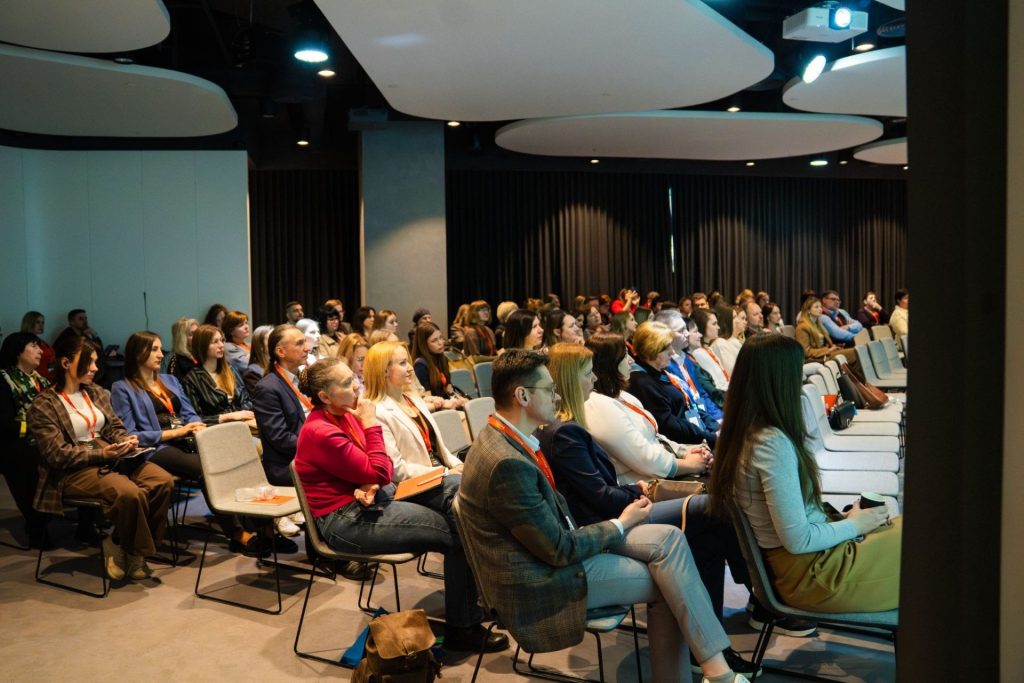
On April 16, 2026, we held the second Kyiv Drug Safety Day conference in Kyiv — and it was a special day for our community. Over 80 participants joined us: pharmacovigilance specialists, regulatory representatives, physicians, academics, and business leaders. People who work with the drug safety system every day and understand the weight of responsibility that comes with it.
Our first conference was dedicated to technology and automation — and it sparked a powerful conversation about the future of the industry. This year, we made a deliberate shift: away from technology and toward people. Because behind every system, algorithm, and process stands a specific person who makes decisions, takes responsibility, and communicates with others. And it is the quality of those decisions and interactions that ultimately determines how well the entire system functions.
The theme of this year’s conference was: “Leadership and Communication in Pharmacovigilance: The Role of Everyone.” We brought together leading experts to explore how effective interaction and leadership at every level transform the drug safety system. And as the day unfolded, the conversation went deeper than we had anticipated.
Why This Year We Talked About People, Not Technology
Pharmacovigilance in Ukraine is going through one of the most complex — and most important — periods in its history. The industry is moving toward harmonisation with European standards, the creation of the Ukrainian Pharmaceutical Agency is actively being discussed, and new digital tools are being introduced. Change is happening fast. And in these conditions, a critical question emerges: who is actually leading these changes? Who makes decisions when there are no clear instructions? Who takes responsibility when the situation goes beyond what the regulations cover?
The answer is always the same — a specific person. A specialist, a manager, a QPPV, a physician. And that is exactly why we chose to focus this year on leadership, communication, and responsibility — not as abstract concepts, but as practical tools that shape the quality of drug safety every single day.
Borys Lomako: Superpowers Instead of Weaknesses
Opening the conference was Borys Lomako, entrepreneur, change implementation mentor, and co-owner of the agency “Paialʼnyk: Psychology in Business.” We deliberately invited someone from outside the pharmaceutical industry, and it worked exactly as we had hoped. Borys set the tone immediately: high energy, no corporate template, and a very practical perspective on leadership as the ability to drive change through people.
“I’m not from pharmacovigilance, so I wanted to shake things up a little. Remember — all your opportunities and all your challenges are people,” he said.
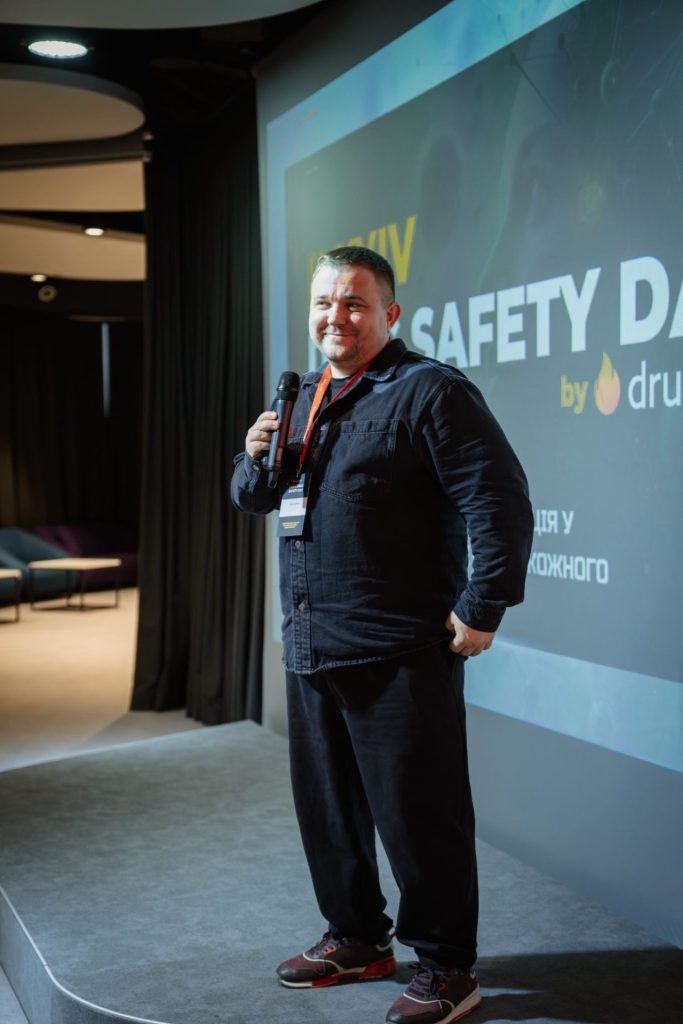
He introduced the concept of the “superpower”: something a person does better than others and draws energy from. The leader’s job, he argued, is not to fix everyone’s weaknesses, but to build an environment where people’s strengths complement each other and work toward a shared result. And if that work is not done consciously, no automation or technology will protect the system from human error.
Dmytro Horilyk: In the Critical Moment, There Will Only Be You
Our CEO, Dmytro Horilyk, talked about leadership not as a set of management skills, but as a collection of personal qualities that reveal themselves precisely when things are hardest. He emphasised that pharmacovigilance is not just about processes and regulations — at its heart, it is about the responsibility of a specific person.
“In the critical moment, you won’t have time, you won’t have complete information, and you won’t have certainty. There will be only one thing — you,” he said.
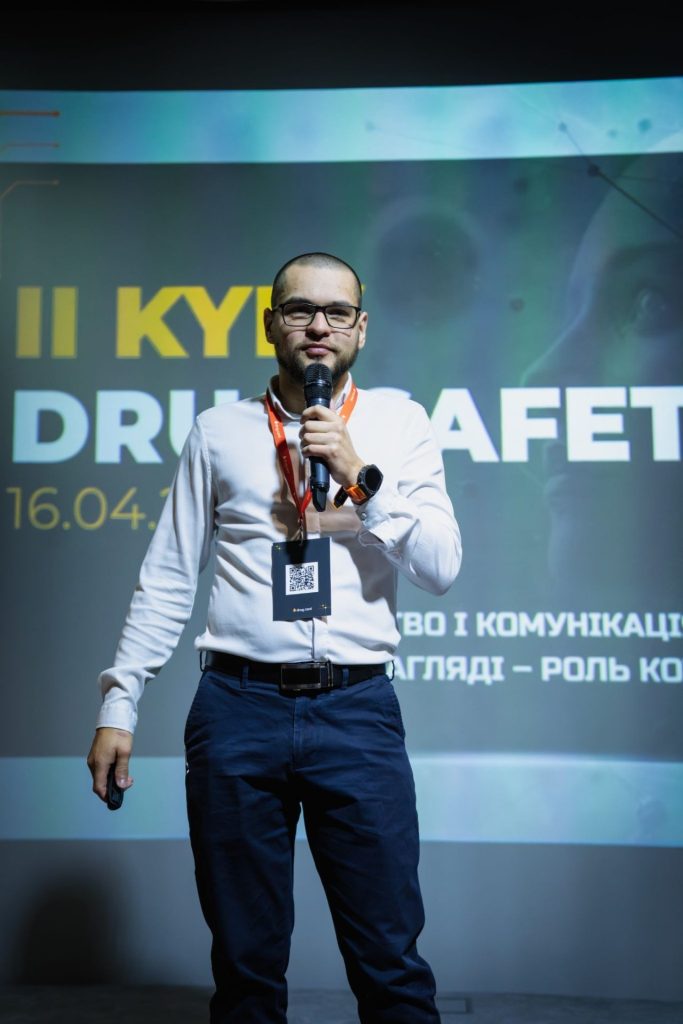
He spoke about critical judgment — the ability to make decisions when the picture is incomplete, but action is required right now. An organisation’s culture, he argued, is defined precisely by how people behave in those moments — whether they take ownership, or wait for more data, or look for permission from above.
Mykola Romanok: Speak the Language of Decisions
Mykola Romanok, founder of the Archimed group of companies and co-chair of the healthcare providers committee at the American Chamber of Commerce in Ukraine, focused on why functional teams and leadership so often speak different languages — and what to do about it.
“If you’re not being heard, it’s not always because your manager is bad. Often it’s because you’re speaking the wrong language,” he noted.
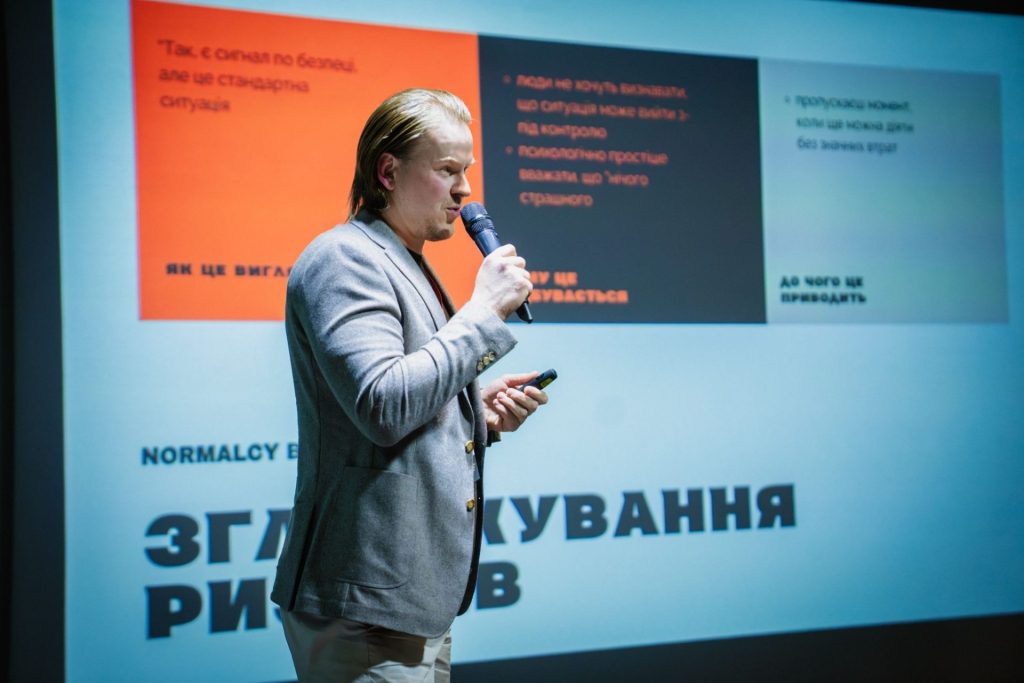
Pharmacovigilance specialists often speak in terms of risks and processes — but don’t translate this into the language of business consequences that leadership understands. Meanwhile, by the time the real picture surfaces, there is no longer time for a proactive solution — only damage control. Mykola offered practical approaches to building communication that ensures information reaches the right people at the right time, with the right level of urgency.
Panel One: Pharmacovigilance Under Regulatory Transformation
The first panel — “Pharmacovigilance in Ukraine Under Regulatory Transformation” — was moderated by Artem Horilyk, with Yevhen Donets (Helsi), Tetiana Pohorielova (Novo Nordisk), and Yevheniia Ishkova (The State Expert Center) joining the conversation.
Harmonisation with European standards is not merely a technical matter — it is a question of institutional capacity, human resources, and the system’s ability to keep functioning through a period of transition. Participants explored how to ensure continuity of procedures when the regulatory framework itself is changing, where digital tools genuinely help, and where they create only an illusion of control. Yevhen Donets reminded the room that transforming a system requires systemic thinking: you cannot fix individual nodes without thinking about the architecture of the whole.
Panel Two: Who Really Makes Decisions in Pharmacovigilance?
The second panel — “Who Really Makes Decisions in Pharmacovigilance?” — was moderated by Dmytro Horilyk, with Viacheslav Turok (Darnytsia), Anton Voitenko (Astellas), Myroslava Hubar (Yuria-Pharm), and Valentyna Yeremenko (Sokola PV Services).
Formally, every company has a QPPV, processes, and regulations. But real decisions — especially in non-standard situations — are often made somewhere entirely different from where the organisational chart suggests. Participants spoke openly about informal mechanisms of influence, the actual weight the QPPV role carries in different types of organisations, and how outsourcing can dilute accountability to the point where no one truly owns the decision. The discussion was exactly the kind that produces honest answers, not the ones that sound right in public.
What We Announced at the Conference
We are pleased to announce that DrugCard has received the status of an official provider of Continuing Professional Development (CPD) credits. This means that participation in our events now counts as verified educational activity — and this conference was the first event under our new status.
Our Secret Drug Safety Club has grown to 90 members. This is a community of specialists who care about the development of pharmacovigilance in Ukraine — and we are glad to see it grow with every event we hold.
What’s Next
Kyiv Drug Safety Day 2026 reaffirmed what we have believed from the very beginning: the future of pharmacovigilance is not shaped by regulatory requirements and technological tools alone. It is shaped by people — their ability to make decisions under pressure, to speak openly about problems, to take ownership, and to build teams where everyone understands their role.
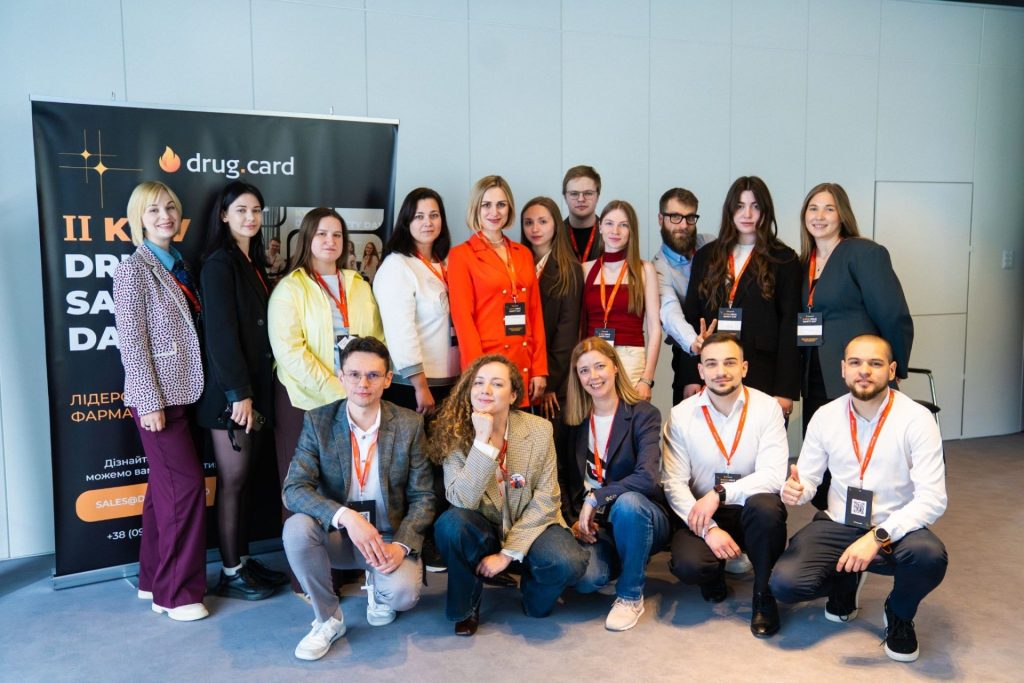
We are planning to expand the format of our events — new conferences in Ukraine and Europe, educational webinars, and new formats for our community. Because the conversation we have started is far from over.
Thank you to everyone who was with us on April 16. See you at the next one!